Most people experience a headache at some point. It might feel like a dull ache, pressure around the forehead, pain on one side of the head, or a throbbing sensation that makes it difficult to concentrate.
But something surprising is happening when your head hurts: your brain tissue itself does not feel pain in the way your skin does.
So where does headache pain actually come from?
Let’s look at what causes headaches, why different headaches feel different, and some of the everyday factors that can trigger them.
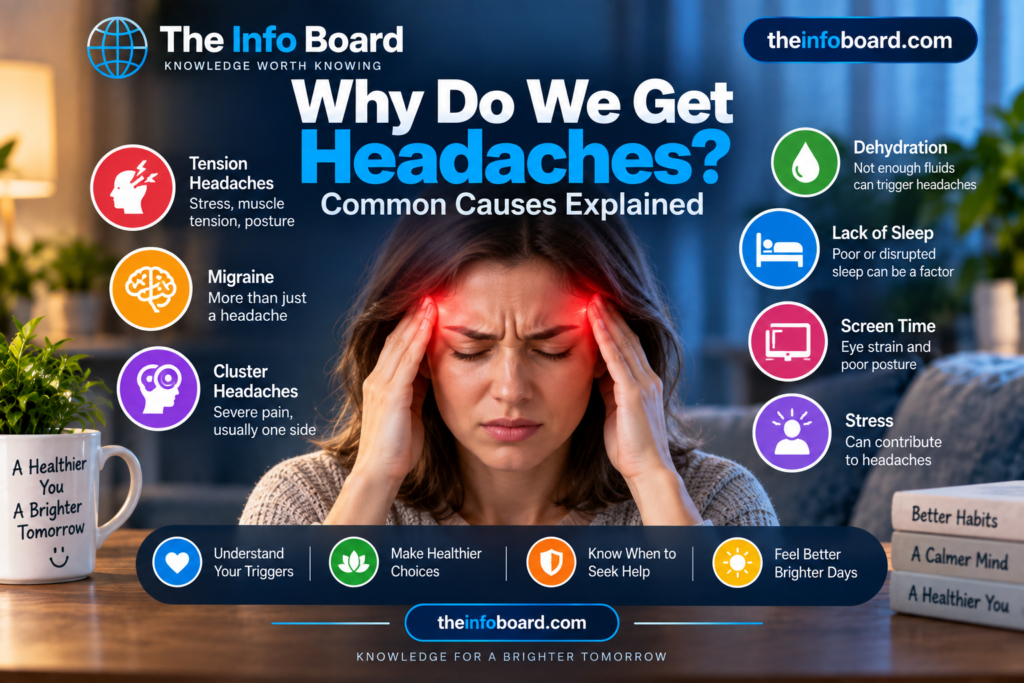
Why Do We Get Headaches? Common Causes Explained
What Is a Headache?
A headache is pain or discomfort felt somewhere in the head, face or upper neck.
The pain can range from mild to severe and may last anywhere from a short period to many hours—or sometimes longer.
Headaches can involve pain-sensitive structures around the brain and skull, including nerves, blood vessels, muscles and tissues.
This is why headache pain can feel as though it is coming from inside your brain even though the brain tissue itself isn’t generating the pain sensation.
Why Doesn’t the Brain Feel Pain?
The brain processes pain signals from throughout the body, but brain tissue itself doesn’t contain the same kinds of pain receptors found in many other tissues.
Instead, headache pain can arise from structures surrounding or connected with the brain.
These include:
- Blood vessels
- Nerves
- Muscles of the head and neck
- The membranes surrounding the brain
- Sinuses
- Eyes and surrounding structures
Signals from these areas travel through nerves and are interpreted by the brain as pain.
Are All Headaches the Same?
No.
There are many different types of headache, and they can have different causes, symptoms and patterns.
Doctors broadly distinguish between primary headaches and secondary headaches.
A primary headache is the condition itself.
A secondary headache occurs because of another underlying problem.
Some of the most familiar primary headache disorders include tension-type headaches, migraine and cluster headaches.
What Is a Tension Headache?
Tension-type headaches are very common.
They often produce a feeling of pressure or tightness around the head.
People sometimes describe the sensation as though a band were wrapped around their forehead.
Pain may occur on both sides of the head and can sometimes be associated with tenderness around the head, face or neck.
Possible contributing factors can include stress and sleep problems, although headache triggers can vary considerably between people.
What Is a Migraine?
Migraine is more than simply a particularly painful headache.
It is a neurological condition that can produce several symptoms.
A migraine attack may involve:
Throbbing or pulsating pain
Pain that is often worse on one side
Sensitivity to light
Sensitivity to sound
Nausea or vomiting
Some people also experience an aura before or during migraine.
Aura can involve temporary neurological symptoms such as visual disturbances, tingling or difficulties with speech.
Not everyone who experiences migraine has aura.
What Causes Migraine?
The exact biology of migraine is complex.
Research indicates that changes involving nerves, brain signalling and other neurological mechanisms play important roles.
Migraine can also run in families, suggesting a genetic component.
Individual attacks may be associated with triggers such as disrupted sleep, stress, hormonal changes, skipped meals or certain environmental factors.
However, triggers differ from person to person.
Something that appears to trigger migraine in one individual may have no effect on another.
What Is a Cluster Headache?
Cluster headaches are much less common than tension-type headaches or migraine but can cause extremely severe pain.
The pain typically occurs around or behind one eye and affects one side of the head.
Attacks can occur repeatedly during periods known as clusters.
Symptoms on the affected side may include a watery or red eye, nasal symptoms or a drooping eyelid.
Because cluster headache has a distinctive pattern and requires appropriate diagnosis and treatment, someone experiencing symptoms like these should seek medical advice.
Can Dehydration Cause a Headache?
Dehydration can be associated with headaches.
Your body depends on adequate fluid for normal function, and insufficient fluid intake or excessive fluid loss may contribute to headache symptoms in some people.
Dehydration may occur because of:
Hot weather
Heavy exercise
Illness involving vomiting or diarrhoea
Not drinking enough fluids
Alcohol consumption
If dehydration is contributing to a mild headache, gradually replacing lost fluids may help.
Severe dehydration, however, can require medical attention.
Can Lack of Sleep Cause Headaches?
Sleep and headaches are closely connected.
Too little sleep, disrupted sleep and changes in normal sleeping patterns can be associated with headaches in some people.
Interestingly, sleeping considerably longer than usual can also be associated with headaches for some individuals.
A consistent sleep routine can therefore be helpful, particularly for people who experience recurring headaches or migraine.
Can Stress Give You a Headache?
Yes, stress can contribute to headaches.
Stress can affect muscle tension, sleep, eating habits and other physiological processes.
Some people notice that their headaches occur during stressful periods.
Others develop a headache after a stressful situation has passed.
Because stress affects people differently, recognizing your own patterns can be useful.
Can Looking at Screens Cause Headaches?
Long periods using computers, phones and other screens can contribute to discomfort in some people.
The screen itself isn’t necessarily the only factor.
Extended screen use may involve:
Eye strain
Reduced blinking
Poor posture
Neck and shoulder tension
Long periods without breaks
Taking regular breaks and making sure your screen and working position are comfortable may help reduce these problems.
Can Poor Posture Cause Headaches?
Posture can contribute to muscle tension around the neck and shoulders.
For example, spending hours leaning toward a laptop may place additional strain on muscles.
This doesn’t mean every headache after computer use is caused by posture, but ergonomics can be worth considering when headaches regularly occur during or after desk work.
Can Skipping Meals Cause Headaches?
For some people, going a long time without eating can contribute to headaches or migraine attacks.
Regular meals may help people who notice this pattern.
Headaches associated with skipped meals can also occur alongside other factors such as dehydration, stress, caffeine changes or lack of sleep.
This is one reason identifying a single headache trigger can sometimes be difficult.
Can Caffeine Cause Headaches?
Caffeine has an interesting relationship with headaches.
It can sometimes be included in headache treatments and may help certain people.
However, regular caffeine consumption can also lead to withdrawal headaches if intake suddenly stops or decreases substantially.
Someone accustomed to several caffeinated drinks each day may therefore experience a headache when they unexpectedly go without them.
Consuming large amounts of caffeine can create other problems as well, including disruption to sleep.
Read:Why Is Sleep Important? What Happens While You Sleep
Can Alcohol Cause Headaches?
Alcohol can contribute to headaches through several mechanisms.
It may contribute to dehydration, affect sleep and produce physiological changes associated with headache symptoms.
The amount that triggers symptoms varies considerably between individuals.
Can Eye Problems Cause Headaches?
Eye strain and uncorrected vision problems can sometimes contribute to headaches.
Someone who repeatedly develops headaches while reading or working at a computer may benefit from considering whether an eye examination is appropriate.
However, frequent headaches shouldn’t automatically be blamed on eyesight.
There are many possible causes.
What Are Sinus Headaches?
Inflammation or infection affecting the sinuses can cause facial pressure and pain, particularly around the forehead, cheeks and eyes.
However, headaches that people assume are “sinus headaches” may sometimes actually be migraine.
Migraine can produce symptoms that overlap with sinus complaints, including facial pressure and nasal symptoms.
Persistent or severe symptoms should therefore be properly assessed rather than self-diagnosed.
Why Do Headaches Sometimes Affect Only One Side?
Some headache disorders have characteristic patterns.
Migraine frequently—but not always—affects one side of the head.
Cluster headaches usually cause severe pain on one side, commonly around one eye.
Other headaches may affect both sides.
The location of pain can provide useful information, but location alone isn’t enough to diagnose the cause.
Why Does a Headache Sometimes Feel Like It’s Pulsing?
Throbbing or pulsating pain is commonly associated with migraine, although headache sensations vary.
The mechanisms behind migraine pain involve complex interactions between the nervous system and pain-sensitive structures.
The sensation may feel synchronized with the heartbeat, producing the familiar “pounding” description.
Why Can Bright Light Make a Headache Worse?
Sensitivity to light—known as photophobia—is common during migraine attacks.
Ordinary lighting that normally feels comfortable may suddenly become unpleasant or painful.
People experiencing migraine may therefore prefer a darker, quieter environment during an attack.
Sensitivity to sound can occur as well.
Why Can Headaches Make You Feel Sick?
Nausea and vomiting can accompany migraine.
Migraine involves brain networks that influence more than pain alone, which helps explain why an attack can affect the digestive system, sensory processing and other functions.
This is another reason migraine shouldn’t simply be thought of as “a bad headache.”
What Is a Headache Diary?
If headaches happen repeatedly, recording when they occur can sometimes reveal patterns.
A simple headache diary might record:
Date and time
How long the headache lasted
Where the pain occurred
How severe it was
Sleep
Meals
Caffeine
Stress
Possible triggers
Other symptoms
Medication taken
This information can also be useful when discussing recurring headaches with a healthcare professional.
When Should You Seek Medical Advice?
Most headaches aren’t caused by a serious underlying condition.
However, certain symptoms require prompt medical assessment.
Seek urgent medical help for a sudden, extremely severe headache, particularly if it reaches maximum intensity very quickly.
Urgent assessment may also be needed when a headache occurs with symptoms such as:
- Weakness or numbness
- Difficulty speaking
- Confusion or unusual drowsiness
- Loss of vision
- Seizure
- High fever with concerning symptoms
- A significant head injury
- Other sudden neurological changes
New or worsening headaches, headaches that repeatedly interfere with everyday life, or a substantial change in your usual headache pattern should also be discussed with a healthcare professional.
Can Taking Too Many Painkillers Cause Headaches?
Surprisingly, yes.
Frequent use of medicines intended to treat headaches can sometimes contribute to medication-overuse headache.
This can create a difficult cycle in which someone takes medication for recurring headaches, only for frequent medication use to become part of the problem.
If you regularly need pain medication for headaches, speak with a pharmacist, GP or other appropriate healthcare professional rather than continually increasing or repeating treatment yourself.
Can You Prevent Every Headache?
Probably not.
But understanding your own headache patterns may help reduce some attacks.
Factors worth paying attention to include regular sleep, adequate hydration, regular meals, caffeine intake, stress and long periods of screen use.
For people with migraine or another diagnosed headache disorder, a healthcare professional may recommend additional treatment or prevention strategies.
Final Thoughts
A headache isn’t simply your brain “hurting.”
The pain generally comes from pain-sensitive nerves, blood vessels, muscles and tissues in and around the head, with the brain interpreting the signals.
Headaches can be associated with everyday factors such as stress, sleep disruption, dehydration and skipped meals, while conditions such as migraine and cluster headache involve more specific neurological processes.
Most occasional headaches aren’t a sign of something dangerous.
But headache patterns matter.
A headache that is sudden and exceptionally severe, accompanied by neurological symptoms, significantly different from your usual headaches, or becoming increasingly frequent deserves appropriate medical attention.
Frequently Asked Questions
Why do we get headaches?
Headache pain can originate from pain-sensitive nerves, blood vessels, muscles and tissues around the head. Different headache disorders have different underlying mechanisms and triggers.
Can dehydration cause headaches?
Yes. Dehydration can contribute to headaches in some people, particularly after inadequate fluid intake, heavy exercise, hot weather or illness.
Can stress cause headaches?
Stress is a common factor associated with headaches and can also affect sleep, muscle tension and other behaviours that may contribute.
Why do I wake up with a headache?
Morning headaches can have several possible causes, including sleep problems and other medical factors. Frequent morning headaches should be discussed with a healthcare professional.
Can too much screen time cause headaches?
Extended screen use can contribute to eye strain, poor posture and muscle tension, which may be associated with headaches in some people.
When is a headache an emergency?
A sudden extremely severe headache or a headache accompanied by serious neurological symptoms such as weakness, confusion, seizures, speech problems or loss of vision requires urgent medical assessment.
External source
Health disclaimer
This article provides general educational information and is not a substitute for professional medical advice, diagnosis or treatment. If you’re concerned about headaches or other symptoms, seek advice from an appropriate healthcare professional.
[…] Read:Why Do We Get Headaches? Common Causes Explained […]