Direct Debits pay many familiar UK bills automatically: council tax, energy, broadband, insurance and even credit-card repayments. But who controls the payment, what happens if the amount changes, and can you get money back when something goes wrong?
A Direct Debit is an instruction that authorises an organisation to collect money from your bank or building society account. It can collect the same amount regularly or different amounts, subject to the terms of the arrangement and the UK Direct Debit scheme.
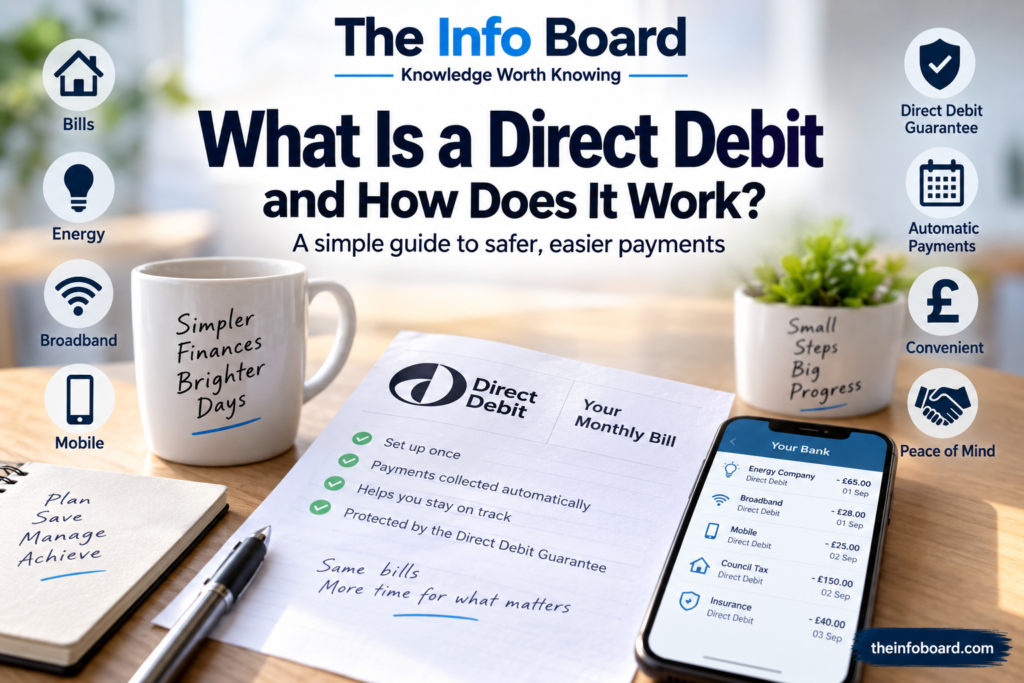
How Does a Direct Debit Work?
Imagine your electricity supplier collects £85 each month. After you authorise a Direct Debit, the supplier requests the payment through the banking system on the agreed date. Your bank then processes the request, provided it can do so under your account’s terms and available balance.
- You give permission. You complete a Direct Debit instruction, often online, by telephone or on a form.
- The organisation confirms the arrangement. It tells you when and how much it plans to collect.
- The organisation requests payment. You do not need to log in and send the money manually each month.
- Your bank processes the collection. The amount appears as an outgoing Direct Debit on your account.
A Direct Debit is not a transfer you initiate each month. It is a payment collected by an organisation you have authorised. For more details, see MoneyHelper’s guide to automatic payments.
Direct Debit vs Standing Order vs Recurring Card Payment
These payment methods can look similar in a banking app, but they work differently.
| Feature | Direct Debit | Standing order | Recurring card payment |
|---|---|---|---|
| Who initiates each payment? | The authorised organisation | Your bank, following your instruction | The merchant using your card authority |
| Can the amount vary? | Yes, with the required notice | Normally fixed until you change it | It may vary within what you agreed |
| Typical use | Utilities and council tax | Rent or regular savings transfers | Streaming and other subscriptions |
| Direct Debit Guarantee? | Yes | No | No |
Example: You could use a standing order to move £50 into your savings each payday, but a Direct Debit to pay an energy bill that may change. A streaming subscription paid using your debit-card number may instead be a recurring card payment (also called a continuous payment authority). The Financial Conduct Authority explains the separate rights for recurring card payments.
Can a Company Change the Direct Debit Amount or Date?
Yes, but it must follow the scheme’s notification requirements. The official Direct Debit Guarantee says organisations must normally provide 10 working days’ advance notice when the amount, date or frequency changes, unless a different notice period has been agreed. Where you request a particular collection, the organisation must confirm its amount and date when you make the request.
For instance, if your energy provider increases a £85 monthly collection to £110, check the notice it sends and when the new amount is due. If the amount or date differs from what was correctly notified, contact the provider and your bank.
Read the official Direct Debit Guarantee for the precise protections.
What Is the Direct Debit Guarantee?
The Direct Debit Guarantee protects you if an error occurs in the setup or collection of a Direct Debit. If the collecting organisation, bank or building society makes a payment error, you are entitled to a full and immediate refund of the amount paid from your bank or building society.
For example, suppose an organisation was supposed to collect £60 but incorrectly collects £600. You can contact your bank, explain the error and request a refund under the Guarantee.
Important limits: The Guarantee addresses Direct Debit errors; it is not a general right to avoid a legitimate bill or automatically win a contractual dispute. If a refund is made when you were not entitled to it, the organisation may ask you to pay it back. For disputes over the quality of goods or the underlying agreement, you may need to deal separately with the provider.
What to Do If a Direct Debit Is Wrong
- Check the name of the organisation, amount and collection date against your notice or bill.
- Contact your bank or building society and explain why you believe a Direct Debit error occurred.
- Ask for a refund under the Direct Debit Guarantee, and keep any supporting messages or statements.
- Contact the organisation to resolve the reason for the error and check whether the underlying bill remains payable.
How Do You Cancel a Direct Debit?
You can cancel a Direct Debit by contacting your bank or building society; many providers also let you do this in an app or online banking. The official scheme recommends cancelling at least one full day before the collection is due, because a payment may already be in progress if you leave it too late. Check your bank’s deadline if unsure.
Tell the organisation you were paying as well. Most importantly, cancelling the Direct Debit does not cancel a subscription, insurance policy, loan or other contract. You may need to cancel the service separately or arrange another way to pay money still owed.
For example, stopping a broadband Direct Debit while still under contract could lead to missed bills. If you’re having trouble paying, contact the company first rather than relying on cancelling the collection. See the official cancellation guidance.
What Happens if There Isn’t Enough Money for a Direct Debit?
The bank may reject the payment, or a payment might take you into an agreed overdraft, depending on your account and the transaction. The organisation could try collecting again or ask you to pay another way. A failed payment can also cause consequences under the agreement you’re paying for.
Suppose your balance is £30 and an £80 insurance Direct Debit is due tomorrow. If there is no usable overdraft, the bank may decline the £80 request. It is better to contact the insurer or bank early, rather than assuming the bill will automatically be paid.
For an explanation of borrowing when your account goes below zero, read our guide: What Is an Overdraft and How Does It Actually Work?
Does a Direct Debit Come Out on Weekends or Bank Holidays?
Direct Debit collections normally happen on working days. If the scheduled date falls on a weekend or bank holiday, the payment is generally taken on the next working day, although you should check your bill and any notice from the organisation. Keep enough money available so that a change in the collection day does not cause difficulties.
Are Direct Debits Safe?
Direct Debit is an established UK payment system, with protections for payment errors. That does not mean you should ignore your account. Check regularly that you recognise the organisation collecting payments, that the amount matches your agreement, and that old subscriptions are not still running.
Do not give your account details to an organisation you have not checked. If you see a collection you do not recognise, contact your bank promptly using the official contact details in your banking app, on your card or on the bank’s website.
How to Manage Direct Debits Without Missing Bills
Try this simple monthly review:
| What to check | Why it helps |
|---|---|
| List each Direct Debit and due date | Makes upcoming bills visible |
| Compare amounts with bills or notices | Helps spot unexpected increases or errors |
| Check the balance before payday and bill days | Reduces the risk of failed collections |
| Review unused services | Prevents forgotten subscriptions continuing |
| Keep a small buffer where affordable | Helps cover modest changes in bill amounts |
An unused £15 monthly subscription costs £180 a year. Reviewing automated payments can free up money for planned expenses. See our article on building sinking funds for future bills.
Will Cancelling a Direct Debit Affect Your Credit Score?
Stopping a payment instruction by itself is different from missing a repayment. However, if you cancel a Direct Debit that pays a loan, credit card or other credit commitment and then fail to pay, the missed payment could affect your credit history.
Read our explanation of what a credit score is and why it matters before changing payments tied to credit agreements.
Frequently Asked Questions
Can I get a Direct Debit refund?
Yes, if a Direct Debit payment error occurred, the Direct Debit Guarantee entitles you to a full and immediate refund from your bank or building society. It is not a blanket refund for every payment you no longer want to make.
Can I cancel a Direct Debit through my banking app?
Usually, yes, if your bank offers that feature. Cancel sufficiently ahead of the collection date and notify the organisation. Your contract may still require payment.
Can a Direct Debit be for a different amount each month?
Yes. Variable payments are common for utilities and credit cards. Changes must be notified in line with the Direct Debit scheme and any agreed notice period.
Is a standing order safer than a Direct Debit?
They offer different kinds of control and protections. You set and change the amount of a standing order; an authorised organisation initiates a Direct Debit, which is covered by the Direct Debit Guarantee for payment errors.
What if I don’t recognise a Direct Debit?
Contact your bank immediately and ask it to investigate. Do not rely solely on the name displayed in your transaction list if it is unfamiliar.
The Bottom Line
A Direct Debit is an efficient way to pay bills automatically, including bills that change from month to month. The key is to understand who collects the money, check notices and statements, and remember that cancelling the payment is not the same as cancelling the contract.
Authoritative sources: Direct Debit Guarantee (Pay.UK scheme); MoneyHelper: Direct Debits, standing orders and recurring card payments; FCA: recurring card payments.
Financial disclaimer: This article provides general information, not personalised financial advice. Payment arrangements and account terms vary.