Christmas, car insurance and annual subscriptions may seem expensive when they arrive in one month. But unlike a sudden breakdown or job loss, you can often see these costs coming. A sinking fund helps you prepare by saving a manageable amount in advance.
For example, if your car insurance renewal is likely to cost £600 in 12 months, setting aside £50 each month would build the £600 you need. The bill itself has not become cheaper; you have simply spread the saving across the year.
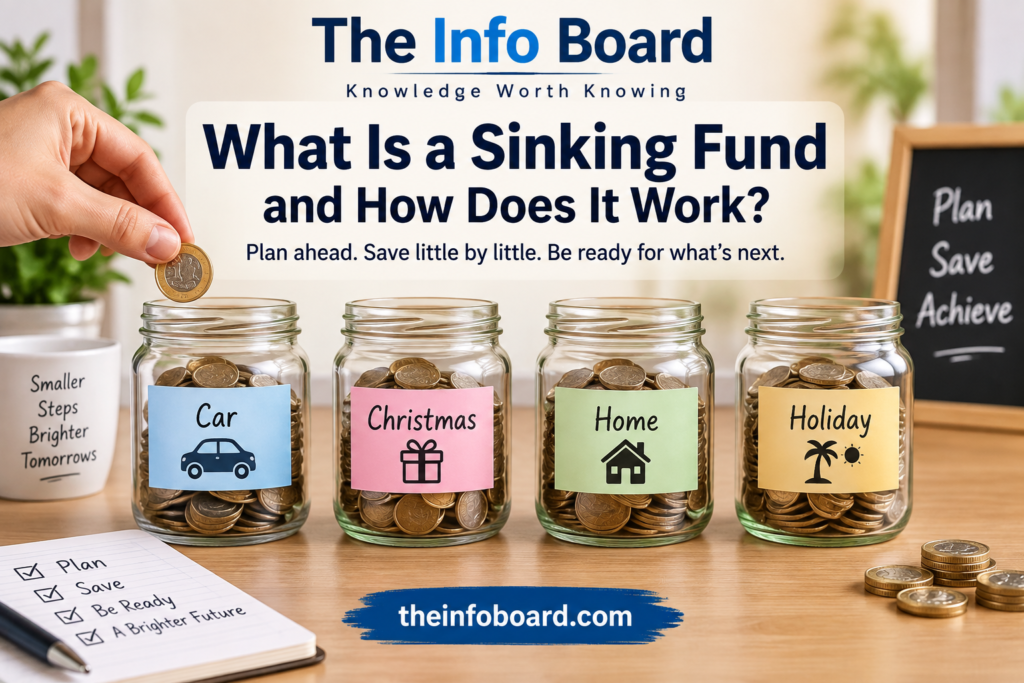
What is a sinking fund?
A sinking fund is money you regularly put aside for a specific, predictable future expense. It could cover a one-off event, such as a wedding, or a recurring bill, such as an annual insurance renewal. The UK’s MoneyHelper service recommends sinking funds as a way to plan for large costs rather than relying on borrowing when they fall due.
You need four things to get started: an expense, an estimated cost, a deadline and an affordable saving schedule.
Sinking fund vs emergency fund: what’s the difference?
| Feature | Sinking fund | Emergency fund |
|---|---|---|
| Purpose | Known or reasonably predictable costs | Unexpected costs or loss of income |
| Typical example | Annual car insurance, Christmas gifts, planned holiday | Sudden urgent repair or losing your job |
| When you spend it | When the planned expense arrives | When an unforeseen problem occurs |
| How you plan it | Target amount and expected date | A flexible financial buffer |
A car’s annual MOT and scheduled service can be planned for, even if the final cost is uncertain. An unexpected major engine failure is different. MoneyHelper suggests building an emergency buffer first if you are starting without savings, before adding multiple sinking funds.
Related reading: What Is an Emergency Fund and How Much Should You Save?
How to calculate your monthly sinking fund
Use this formula:
(Estimated cost − amount already saved) ÷ number of months until payment = monthly saving target
Suppose you expect a £480 annual bill in eight months and already have £80 saved. You still need £400, so the target is £400 ÷ 8 = £50 per month.
If you are paid weekly, divide the remaining amount by the number of paydays before the bill instead. For a variable expense, use recent bills or bank statements to estimate a realistic target, and consider a small extra allowance in case prices rise.
A sample UK household sinking-fund plan
Here is an illustrative plan for someone preparing for several expenses. These are example budgets, not estimates of what every UK household will pay.
| Saving goal | Target | Time left | Monthly amount |
|---|---|---|---|
| Car insurance | £600 | 12 months | £50 |
| Christmas and gifts | £360 | 9 months | £40 |
| MOT and servicing | £300 | 10 months | £30 |
| Home maintenance | £240 | 12 months | £20 |
| Total | £1,500 | Different deadlines | £140 per month |
This plan would require £140 a month while all four goals are being funded. When one bill is paid, that pot can be restarted for the next renewal or its contribution redirected if the cost will not recur.
How to set up a sinking fund in five steps
- List irregular bills. Review the last 12 months of statements for insurance renewals, school expenses, MOTs, birthdays and annual subscriptions.
- Estimate each bill. Use recent amounts, quotes or past spending. Add a modest cushion if the price is uncertain.
- Calculate a realistic contribution. Divide the remaining target by the months or paydays available, then check whether the total fits after essential bills and priority debt payments.
- Separate the money. Use labelled savings pots, separate accounts or a simple spreadsheet. The point is to distinguish money reserved for future bills from spare spending money.
- Automate and review. Consider a standing order just after payday and review the amounts when prices, deadlines or your income change.
MoneyHelper offers a free Budget planner to assess what you can afford to save, and explains how to organise money into savings pots.
Where should you keep sinking-fund money?
For a bill due within months, easy access is usually more useful than locking money away for years. Consider an easy-access savings account or your bank’s savings-pot feature, checking withdrawal rules, any fees and the interest rate. You do not need a different bank account for every goal if you can track the balances reliably.
If your bank balance shows £2,000 but £600 is reserved for insurance, £400 for Christmas and £500 for emergency savings, only £500 is unallocated. Keeping those amounts visible reduces the risk of accidentally spending money already assigned to a future bill.
What if you cannot afford the full amount?
Prioritise predictable essential expenses before optional ones. Car insurance needed for work or necessary home maintenance may come ahead of a holiday. Don’t divert money from rent, groceries or other essential bills to hit an unrealistic target.
A partial fund still helps. If a £500 bill arrives and you have saved £300, you need to find £200 rather than the full £500. You can also adjust the goal, reduce discretionary spending or extend the deadline where possible.
Common mistakes to avoid
| Problem | Practical fix |
|---|---|
| Setting up too many pots | Group similar expenses into ‘Car’, ‘Home’ and ‘Celebrations’ |
| Underestimating a future bill | Use previous statements and review expected price increases |
| Forgetting to transfer the money | Set an affordable automatic transfer after payday |
| Using the pot for unrelated shopping | Label the savings and keep everyday spending separate |
| Not restarting after a renewal | Set the new deadline and begin saving for the following year |
Can a sinking fund help you avoid debt?
It may reduce the need to use a credit card or Buy Now Pay Later for predictable spending. That doesn’t mean borrowing is always inappropriate, but interest and fees can increase the eventual cost. Saving ahead gives you more choices when the bill arrives.
If a bill is already overdue or you are struggling with essential payments, budgeting support may be more urgent than establishing a new savings goal. MoneyHelper provides guidance on managing a squeezed income.
Should you earn interest on a sinking fund?
Interest can help your balance grow, but for a near-term expense, accessibility and suitable account terms matter. Interest rates may change, and the savings target should not rely on receiving a particular return. If you’re comparing savings products, our guide to compound interest explains how interest can accumulate.
The bottom line
A sinking fund turns a known future cost into smaller regular saving targets. List the bill, estimate the cost, count the months remaining and decide what you can comfortably put aside. Start with a small number of important expenses and review your plan as circumstances change.
The aim isn’t to make bills disappear. It’s to make them less disruptive when they arrive.
Frequently asked questions
Is a sinking fund the same as an emergency fund?
No. A sinking fund covers known future costs; an emergency fund helps with unexpected financial problems.
How many sinking funds should I have?
There is no required number. Begin with the most important predictable bills, and group similar expenses if several pots become difficult to manage.
Do I need a separate bank account?
No. Separate digital pots, savings accounts or a reliable tracking method can all work. What matters is that money reserved for a bill remains identifiable.
What if the expense costs more than I planned?
Use the savings you have, reassess the remaining shortfall and adjust future targets. Regular reviews can help catch changing costs early.
Can I use sinking funds for Christmas or holidays?
Yes. Both are common examples of planned expenses that can be saved for over several months.
Further reading: MoneyHelper — Sinking funds explained.
Financial disclaimer: This article provides general educational information and is not personalised financial advice. Suitable priorities depend on your circumstances.