You finish lunch or dinner feeling satisfied, but not long afterwards something else happens: your energy drops, concentration becomes harder and suddenly a nap sounds very appealing.
Feeling sleepy after eating is common. It is sometimes called post-meal sleepiness or postprandial somnolence.
It can be tempting to blame the feeling entirely on digestion or assume that all your blood has been diverted to your stomach. The real explanation is more complicated.
Your natural body clock, the size and composition of your meal, sleep quality and several other factors can all influence how alert you feel after eating.
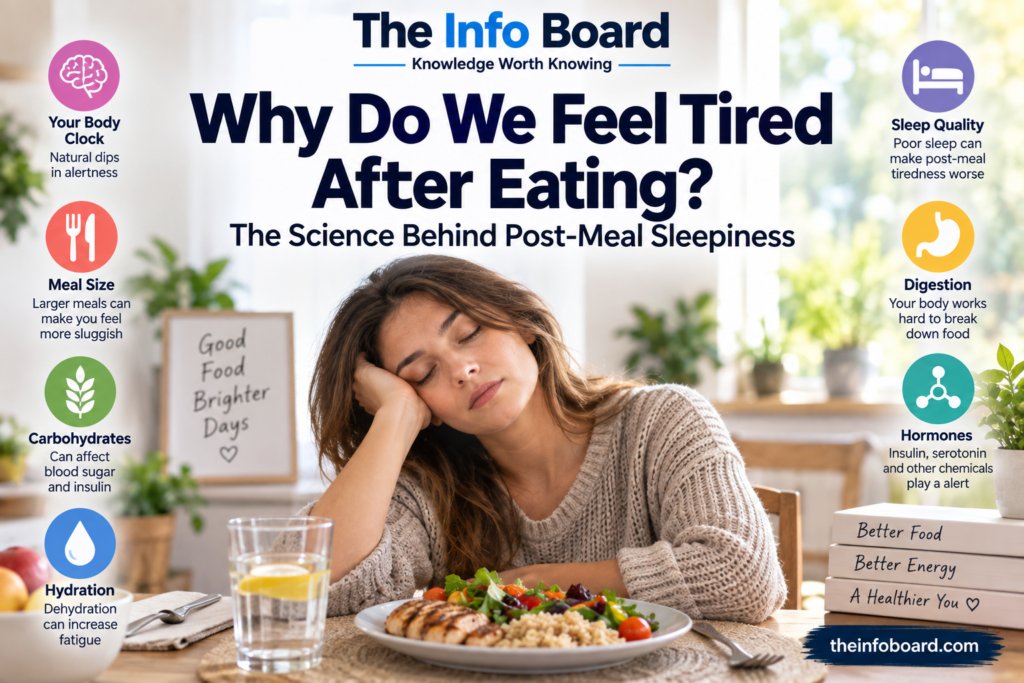
Is It Normal to Feel Tired After Eating?
Some degree of sleepiness after a meal can be perfectly normal.
Your alertness naturally changes throughout the day, and many people experience a dip during the afternoon.
If that natural dip happens shortly after lunch, it is easy to assume that the food alone caused the tiredness.
A large meal can make the sensation more noticeable.
Occasional mild tiredness after eating is therefore usually very different from becoming overwhelmingly exhausted after every meal.
Does Digestion Make You Sleepy?
Digestion is part of the picture, but the popular explanation is often oversimplified.
After you eat, your digestive system becomes active. Food needs to be broken down, nutrients absorbed and energy stored or used.
Your nervous system and hormones coordinate these processes.
However, the idea that eating simply sends so much blood to your stomach that your brain is deprived of blood and makes you sleepy is misleading.
A healthy body carefully regulates blood flow to different organs.
Post-meal tiredness is better understood as the result of several processes happening together, rather than your brain simply running short of blood.
Your Body Clock Matters
Humans have an internal timing system known as the circadian rhythm.
This approximately 24-hour biological clock helps regulate when you feel awake and when you feel sleepy.
Light is one of its most important signals.
But our alertness is not perfectly constant throughout the day.
Many people experience a natural reduction in alertness during the early-to-mid afternoon. If lunch happens shortly before this period, the normal circadian dip and the effects of eating can overlap.
That helps explain why afternoon sleepiness can occur even after a reasonably healthy lunch.
Does the Size of the Meal Matter?
Yes.
A very large meal is more likely to leave some people feeling sluggish than a smaller meal.
Think about the difference between eating a modest sandwich and consuming a huge meal with several courses.
Large meals require substantial digestive activity and can produce larger changes in nutrients and hormones after eating.
They can also simply make you feel physically full and less inclined to be active.
If you regularly feel uncomfortable and exhausted after lunch, reducing the portion size may be worth trying.
Do Carbohydrates Make You Tired?
Carbohydrates are broken down into glucose, which enters the bloodstream and provides an important source of energy.
In response to rising blood glucose, the pancreas releases insulin, which helps cells take up and use or store glucose.
Highly refined carbohydrate-rich foods can sometimes cause relatively rapid changes in blood glucose.
But it is too simplistic to say that carbohydrates automatically make everyone sleepy.
The type of carbohydrate, portion size and what else you eat with it all matter.
A balanced meal containing protein, fibre and less-refined carbohydrate is digested differently from a large meal dominated by sugary drinks and highly refined foods.
What About Blood Sugar Crashes?
People often describe afternoon tiredness as a “sugar crash.”
There can be changes in glucose and insulin after eating, particularly following meals rich in rapidly absorbed carbohydrates.
However, ordinary post-meal sleepiness does not automatically mean your blood sugar has fallen dangerously low.
Your body normally works to keep blood glucose within a controlled range.
If you repeatedly experience symptoms such as severe weakness, shaking, sweating, confusion or significant dizziness around meals, that deserves proper medical attention rather than simply being dismissed as normal tiredness.
Do Protein and Tryptophan Make You Sleepy?
You may have heard that foods containing tryptophan make people sleepy.
Tryptophan is an amino acid used by the body in pathways involved in producing serotonin and melatonin, substances associated with mood and sleep regulation.
Many foods contain tryptophan, including eggs, dairy products, meat, fish, nuts and seeds.
But eating one tryptophan-containing food does not act like taking a sleeping tablet.
Post-meal sleepiness results from a much broader interaction between food, metabolism, hormones, the nervous system and your existing sleep pressure.
Why Do Heavy Meals Feel Worse?
Meals that are very large or particularly rich can make sluggishness more noticeable.
They may also cause uncomfortable fullness, bloating or indigestion.
If you eat until you feel extremely full, sitting quietly afterwards can make the transition from “satisfied” to “sleepy” seem even stronger.
Alcohol can intensify the effect because it can cause drowsiness independently of the meal.
Can Dehydration Make Post-Meal Tiredness Worse?
Yes, dehydration can contribute to tiredness generally.
If you have not consumed enough fluid during the day, you may already feel fatigued before you eat.
That means the meal may receive all the blame when inadequate hydration is contributing as well.
Drinking regularly throughout the day is more useful than trying to correct significant dehydration only at mealtimes.
Related: Read What Happens to Your Body When You Don’t Drink Enough Water?
Poor Sleep Can Be the Real Cause
Sometimes lunch is not the main problem at all.
If you slept badly the night before, your body’s drive for sleep increases.
You may manage reasonably well during a busy morning because activity, daylight, caffeine and work keep you stimulated.
Then you sit down, eat lunch and enter the natural afternoon dip.
Suddenly the underlying sleepiness becomes much harder to ignore.
Regular post-lunch exhaustion can therefore be a useful reason to examine your overall sleep routine.
Related: Read Why Is Sleep Important? What Happens While You Sleep.
Read:What Happens to Your Body When You Don’t Drink Enough Water?
Does Caffeine Help?
Caffeine can temporarily improve alertness because it interferes with the action of adenosine, a chemical involved in building sleep pressure.
Coffee or tea may therefore make you feel less sleepy.
But caffeine does not replace sleep.
Using large amounts of caffeine late in the day can also interfere with nighttime sleep, potentially creating a cycle:
poor sleep → daytime tiredness → more caffeine → worse sleep → more daytime tiredness.
Timing and quantity matter.
Can Walking After a Meal Help?
Light activity can be useful after eating.
Instead of immediately sitting motionless for the rest of the afternoon, a short walk may help you feel more alert.
It also breaks up prolonged sitting.
You do not need an intense workout immediately after lunch. Even gentle movement and some daylight can make a difference to how awake you feel.
How Can You Reduce Tiredness After Eating?
If ordinary post-meal sleepiness is bothering you, several simple changes are worth experimenting with:
- Get sufficient, regular sleep.
- Avoid routinely eating enormous meals.
- Include protein and fibre in meals.
- Choose less-refined carbohydrate sources more often.
- Drink enough fluids throughout the day.
- Limit excessive alcohol.
- Get some daylight during the day.
- Try a gentle walk after eating.
- Pay attention to whether particular meals consistently leave you unusually tired.
The goal is not to eliminate every afternoon dip. Some variation in alertness is part of normal human biology.
Should You Skip Lunch to Avoid Feeling Tired?
Usually, that is not a good solution.
Skipping food may simply leave you hungry, distracted or low in energy later.
A better approach is to experiment with the size and composition of your lunch.
For example, someone who becomes extremely sluggish after a huge lunch might feel better after eating a more moderate balanced meal.
Why Do We Feel Sleepy After a Big Sunday Dinner?
A large Sunday meal can combine several sleep-promoting circumstances at once.
You may eat a larger portion than usual, consume richer food, drink alcohol, sit down for a long period afterwards and be relaxing rather than working.
If you were already slightly sleep-deprived, the effect may feel even stronger.
The famous after-dinner slump therefore cannot necessarily be blamed on one particular ingredient.
When Could Tiredness Be a Sign of Something Else?
Feeling mildly sleepy after a large meal is one thing.
Persistent or excessive fatigue is different.
It is worth speaking to a healthcare professional if tiredness is severe, unexplained, getting worse or significantly affecting everyday life.
Ongoing fatigue can have many possible causes, including sleep problems, anaemia, thyroid conditions, diabetes and other health issues.
Symptoms such as excessive thirst, frequent urination, unexplained weight changes, shortness of breath, palpitations or persistent weakness should not simply be blamed on lunch.
The underlying cause needs to be assessed properly.
Why Keeping a Simple Record Can Help
If the problem happens frequently, note when it occurs.
Record what you ate, approximately how much, how well you slept, when you consumed caffeine and when the tiredness started.
Patterns may become obvious.
Perhaps enormous lunches are the main trigger.
Perhaps the problem happens mainly after nights of poor sleep.
Or perhaps you are tired throughout the day regardless of what you eat.
That distinction can be useful.
The Bottom Line
Feeling tired after eating is usually not caused by one single mechanism.
Your circadian rhythm, sleep pressure, meal size, food composition, hydration and lifestyle can all contribute.
A temporary afternoon slump after a substantial lunch can be completely ordinary.
But if you are becoming overwhelmingly tired after meals, experiencing additional symptoms or struggling with persistent fatigue throughout the day, it is worth investigating rather than assuming food is always responsible.
Sometimes the meal contributes to the tiredness.
Sometimes it simply reveals how tired you already were.
Frequently Asked Questions
Why do I get sleepy immediately after eating?
Meal size and composition can contribute, but your natural circadian rhythm and existing sleep pressure also affect how sleepy you feel.
Is feeling tired after eating normal?
Mild occasional sleepiness can be normal, especially after a large meal or during the natural afternoon dip in alertness.
Does digestion take blood away from the brain?
Blood flow to the digestive system changes after eating, but the idea that your brain simply becomes deprived of blood is an oversimplification. The body regulates circulation while several metabolic and neurological processes contribute to post-meal sleepiness.
Can dehydration make me tired after lunch?
Dehydration can contribute to fatigue generally and may make an afternoon slump feel worse.
Does sugar cause an energy crash?
Highly refined carbohydrates can produce relatively rapid changes in blood glucose and insulin, but post-meal tiredness is more complicated than sugar alone.
Can a short walk help after eating?
Gentle activity and daylight may help improve alertness and can also reduce the amount of time spent sitting.
When should I worry about tiredness after eating?
Seek medical advice if the tiredness is severe, persistent, unexplained or accompanied by concerning symptoms such as unexplained weight changes, excessive thirst, frequent urination, shortness of breath or significant weakness.
External source for publication:
NHS — Tiredness and fatigue
Health disclaimer: This article provides general information and is not a substitute for medical advice, diagnosis or treatment. Speak to a qualified healthcare professional if you are concerned about persistent or severe tiredness.
Leave a Comment